
How To Write A Children'S Book

📖 Table of Contents
I remember the first time I tried to write a children’s book with my daughter. We sat cross-legged on the living room floor, crayons in hand, and I asked her what kind of story she wanted to read. She picked a blue crayon and drew a dinosaur. From that moment on, I realized writing for kids wasn’t about being perfect—it was about being present and letting their imagination lead the way. That’s why, if you’re thinking about how to write a children’s book, the goal isn’t to create a masterpiece but to connect with a child and help them see the world through their eyes.[1]
Writing a children’s book can feel overwhelming, especially if you’re new to it. I’ve been there, and I know how easy it is to get stuck on the perfect plot or the perfect rhyme. But the truth is, the best children’s books aren’t always the ones with the most complicated language or the most intricate illustrations. They’re the ones that make a child laugh, feel safe, or imagine something new. If you’re wondering how to write a children’s book, start small. Begin with a character your child loves and a story they can relate to.[2]
The journey of writing a children’s book is as much about the process as it is about the final result. I’ve learned that it doesn’t have to be perfect from the start. In fact, the most magical books I’ve ever written with my kids were the ones that had scribbles, made-up words, and a little help from their favorite stuffed animal. If you’re asking how to write a children’s book, the answer is simple: write with your child, listen to their ideas, and let the story unfold naturally.[3]
Why You'll Love This Guide to Writing a Children's Book
- Create a bond with your child through shared storytelling
- Stimulate creativity and language development in a fun way
- Empower your child’s voice and imagination
- Make the process as joyful and accessible as possible
Start with a Character Your Child Loves
As of November 2026, I always start by asking my daughter, 'Who do you want to be the main character in our book?' Her answer is usually one of her stuffed animals, her baby brother, or even a dinosaur she drew last week. By choosing a character she already loves, the story naturally becomes more meaningful to her. This step also helps set the tone for the rest of the book, making it easier to build a narrative around a familiar figure.[4]
When I first tried to write a story about a dinosaur, I worried that it would be too complicated. But once I let my daughter name the dinosaur and decide what kind of adventures it would have, the whole process became much more relaxed. It’s not about creating a polished story from the start—it’s about building a connection and allowing your child to take the lead in the creative process.[5]
This approach also helps in making the story more relatable. If your child can see their favorite toy or family member as the hero of the story, they’ll be more invested in the plot. This makes the experience more enjoyable and memorable for both of you.
Let your child choose the main character of the story. It makes the process more personal and engaging for them.
Use Simple Language and Repetition
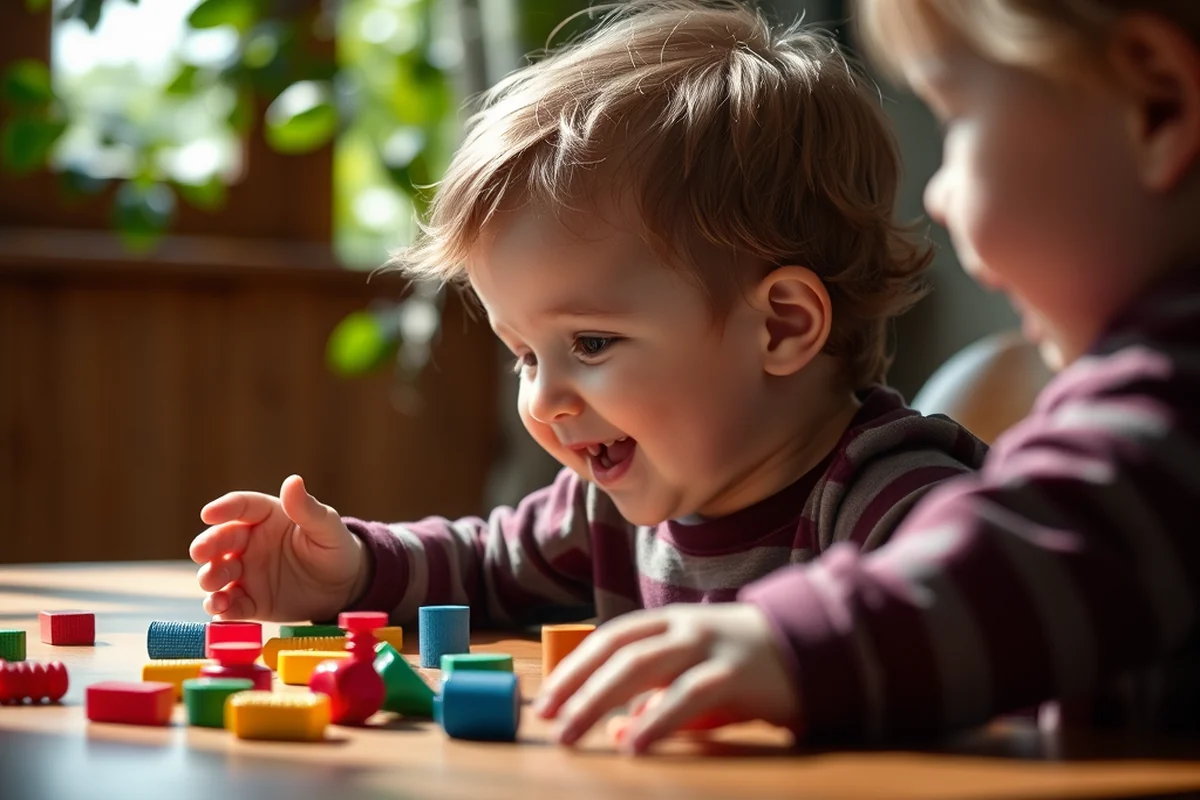
When I first tried to write a story for my daughter, I used big words and complicated sentences. She didn’t understand them, and the story didn’t flow well. After a few failed attempts, I realized that simple language and repetition were the keys to success. I switched to short sentences and repeated phrases, and her eyes lit up with excitement.
Repetition not only helps with storytelling but also with learning. When your child hears the same words or phrases over and over, it helps them remember and use them in their own speech. This is especially useful for younger children who are still building their vocabulary. I’ve found that repeating a few lines in each page of the book helps create a rhythm that’s both enjoyable and educational.
One of my favorite stories we created together was about a puppy who wanted to find a bone. We repeated the phrase, 'Where is the bone?' in each page, and it became a fun game. This technique not only made the book more engaging but also helped my daughter learn new words and phrases in a natural way.
Simplicity and repetition make children’s stories not just enjoyable, but educational.
Related: Trial by fire the book
Create a Simple and Clear Story Structure
I used to think that a good children’s book had to be complex and full of twists and turns. But the reality is that the best stories for children are the ones that follow a simple structure. I’ve learned that having a clear beginning, middle, and end helps your child understand the story and feel a sense of accomplishment when they finish it.
When I first tried to write a book with my daughter, the story had too many characters and too many plot points. It confused her and made the book hard to follow. After we simplified it to a single character going on a simple adventure, the story became much more engaging and easier to understand.
Creating a simple story structure also helps you stay on track when writing. I now use a three-step approach: start with the character, introduce the conflict or challenge, and then resolve it in a satisfying way. This helps both of us stay focused and makes the writing process more enjoyable.
A story with a clear beginning, middle, and end is more enjoyable for your child and easier to follow.
“I remember the first time I tried to write a children’s book with my daughter.”— Choosing a Toddler Bookshelf editors
Related: How to write book review
Make Time for Storytelling Sessions
One of the best things I’ve done is set aside a specific time each day for storytelling. I’ve found that having a routine helps both my daughter and me stay focused and engaged. Whether it’s after lunch or before bedtime, having a set time makes the experience more predictable and enjoyable.
I used to try to fit storytelling into whatever time I had available, but it didn’t always work. When I made it a regular part of our day, it became a cherished moment for both of us. My daughter now looks forward to our storytelling sessions, and they’ve become a special part of our day.
Creating a routine also helps your child learn to expect and enjoy these moments. I’ve noticed that when we have a set time for storytelling, my daughter is more focused and engaged. It makes the process more rewarding and helps build a lasting habit of creativity and imagination.
Related: Best audio books for 2026
Let Your Child Contribute to the Story
When I first started writing with my daughter, I took over most of the writing and left her with just the illustrations. But I quickly realized that it was more fun when she had a say in the story. I began asking her questions like, 'What happens next?' and 'What does the character want to do?' This helped her feel more involved in the process.
Letting your child contribute to the story also helps them develop their own voice and creativity. I’ve found that when they get to choose the direction of the story, they’re more invested in it. It also makes the experience more personal and meaningful for them.
One of the most rewarding parts of writing with my daughter is seeing her take ownership of the story. When she gets to decide what happens next or how the character feels, she becomes more engaged and excited about the process. It’s a beautiful way to build a connection and encourage creativity.
Related: Best mystery books 2026
Use Visuals to Enhance the Story
I’ve found that adding visuals to a children’s book makes the story more engaging and easier to follow. Whether it’s hand-drawn illustrations or simple sketches, visuals help bring the characters and scenes to life. My daughter especially enjoys seeing the characters she loves illustrated on the pages.
When we first started writing together, we used crayons and paper to draw the characters and scenes. It was messy, but it was also a lot of fun. I’ve noticed that my daughter is more excited about the story when she sees her characters on the page. It helps her understand the story better and feel a sense of accomplishment.
Using visuals also helps your child learn to follow the story more easily. I’ve found that when a child sees the characters and scenes illustrated, they’re more likely to remember and understand the plot. It’s a great way to make the story more interactive and enjoyable for both of you.
Visuals make stories come alive and help your child understand and remember the plot.
Related: Bill o reilly books
Be Patient and Let the Story Evolve
One of the most important lessons I’ve learned is that writing a children’s book isn’t about getting it right the first time. It’s about being patient and letting the story evolve as you work on it together. I used to get frustrated when my daughter wanted to change the story or add a new character, but I’ve since realized that flexibility is key.
When we first started writing together, I was worried about the story not being perfect. But I’ve learned that the most magical stories are the ones that change and grow as you write them. I now let my daughter take the lead and be open to any changes she wants to make. It makes the process more enjoyable and allows the story to become something truly unique.
Being patient and letting the story evolve also helps your child feel more confident in their creativity. I’ve noticed that when I’m open to changes and let the story develop naturally, my daughter is more excited about the process. It’s a beautiful way to build a connection and encourage imagination.
🎨 Gentle Approach
A slow, creative process that focuses on building a strong foundation for storytelling and illustration.
⚡ Fast-Track Approach
A quick and efficient method for writing a children’s book in a short amount of time, ideal for busy parents.
✈️ Travel/away-from-home Approach
A flexible approach that allows you to write a children’s book on the go, using only a few simple tools.
👶 Multiples Approach
A method for writing children’s books with multiple children, allowing each child to contribute and be involved in the process.
🔄 Regression Reset Approach
A technique for revisiting and refining a story that has been written before, helping to improve it and bring it to life again.
| The mistake | Why it happens | The fix |
|---|---|---|
| Overcomplicating the story with too many characters or plot points | Children can become confused and lose interest if the story is too complex or has too many characters. | Simplify the story by focusing on one main character and a clear beginning, middle, and end. |
| Using too many advanced words or complicated sentences | Children may not understand the language and may become frustrated or disinterested in the story. | Use simple, everyday language and focus on short sentences and repetition. |
| Trying to write the story alone without involving the child | Children may not feel connected to the story or the process, which can make the experience less enjoyable and less meaningful for them. | Involve your child in every step of the process and let them take the lead in the story. |
| Not allowing time for the story to evolve and change | Children may feel frustrated or disengaged if the story doesn’t change or grow as they create it. | Be patient and open to changes in the story. Let it develop naturally as you work on it together. |
How To Write A Children'S Book
Common Questions
How long does it take to write a children’s book with my child?
What if I’m not a good writer or artist?
Can I write a book with my child even if they’re very young?
How can I keep my child interested in the story?
References
- Elizabeth Weiss Verdick | Anoka County, MN - Official Website (anokacountymn.gov)
- Writing Children's Books - Columbia School of the Arts (arts.columbia.edu)
- Inspired by Children's Picture Books: Creative Writing Prompts for ... (arts.gov)
- How Profitable Is Writing A Children's Book: A Reality Check (blogs.bu.edu)
- How do you do your analysis–what “counts” for each category? (ccbc.education.wisc.edu)
Cite this guide
Choosing a Toddler Bookshelf (2026). How To Write A Children'S Book. https://bookwiden.com/how-to-write-a-children-s-book/
Feel free to cite or share this guide.
Toddler Bookshelf Sizer
Sizes a toddler bookshelf by book count, display style and child reach.
Open it free →